

Active Ingredients
These are FDA-regulated drugs like retinols, which are used in anti-aging formulas, salicylic acid, a common acne treatment, and avobenzone, which protects against UVA/UVB rays. Many have a max capacity in topical treatments for consumer safety.
Inactive Ingredients
This describes the “delivery system” of the active ingredients (most often water or oil-based).
1% zone
Ingredients are always listed in order of concentration, from most to least. “The exception to the rule,” Shourie says, “is that any ingredient under one percent concentration can be listed in any order, so brands will often put more exotic ingredients first to draw customers in.
Expiration
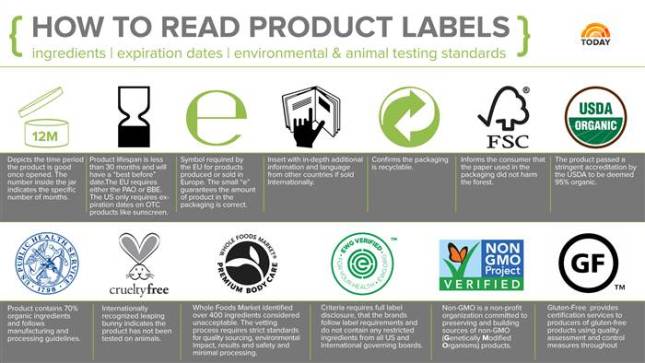
These dates are usually determined by heating a sample in a lab oven to simulate the decay process. The actual expirations vary, but no product should be kept on the shelf more than one-and-a-half years. Shourie says, “Products with natural ingredients generally last a shorter amount time because their molecules are less stable.”
Natural seals
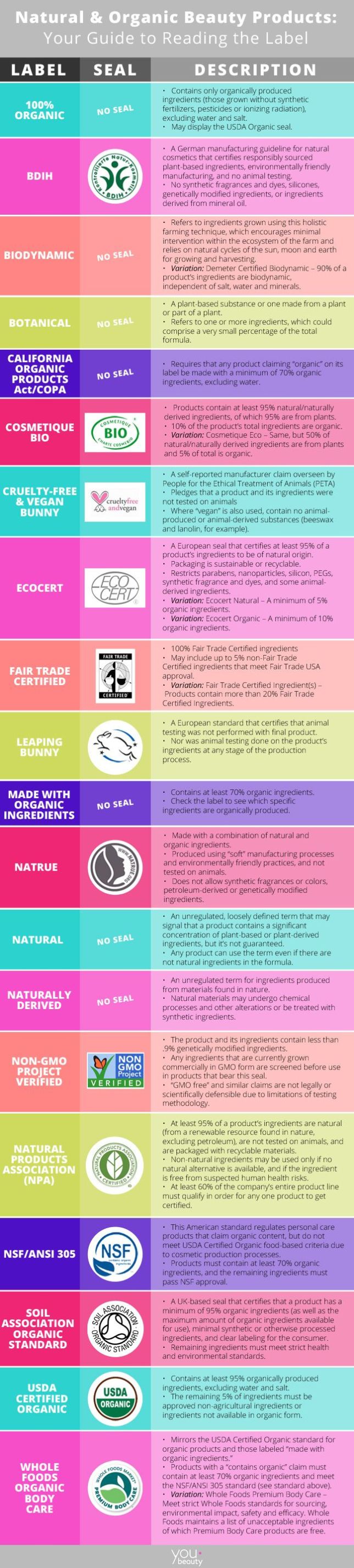
“All-natural” labels vary widely but the USDA Organic seal is stiffly regulated—95 percent of the product’s ingredients must be from a USDA organic farm. “It means quite a lot to see this on a product,” says Shourie.
Paraben-free/preservative-free
Most preservatives are slight irritants because of their bacteria-killing powers but products without them have a shorter shelf-life.
What it means: The maker has conducted some testing of the product in a clinical setting, like a lab.
What it doesn’t mean: That anything significant has been “proven.”
Best for: Someone willing to do her own researching of independent data about ingredients.
Hypoallergenic
What it means: The product has a low chance of causing allergies.
What it doesn’t mean: It has been tested for all allergies. “There’s no way to prove it won’t cause a reaction in some people,” says Howard Murad, a Los Angeles dermatologist.
Best for: People with sensitive skin or a history of allergic reactions.
Broad Spectrum
What it means: Found on sunscreens, it tells you the product protects against both ultraviolet A and B rays.
What it doesn’t mean: That you’re fully covered. No matter what the label says, no sunscreen blocks out all harmful rays.
Best for: Everyone. Broad spectrum is the best protection available.
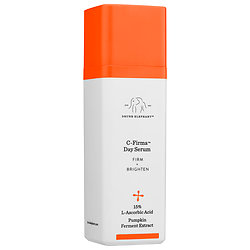
Brightening
What it means: The product contains temporary brighteners, like mica, or ingredients that help even out skin tone.
What it doesn’t mean: Lightening, a term regulated by the FDA. A cream can’t claim it will “lighten” the skin or dark spots unless it contains the chemical hydroquinone.
Best for: People with mildly uneven skin tone.
What it means: The product has no noticeable smell and usually contains no added artificial or chemical fragrances.
What it doesn’t mean: It’s totally free of added substances, like botanical extracts, that mask the smell of the basic ingredients.
Best for: Sensitive, allergy-prone skin.
Firming
What it means: Contains ingredients that help plump up skin for a fuller look.
What it doesn’t mean: Dramatic results. Chances are any “firming” effects you see will be subtle and not permanent.
Best for: Skin that lacks elasticity.
Lifting
What it means: The product helps repair sagging skin, fine lines, and wrinkles.
What it doesn’t mean: Miracles. “The only thing that can really lift is the plastic surgeon,” says Annet King, director of training for the International Dermal Institute.
Best for: Mature skin.
Detoxifying
What it means: Helps skin look radiant by expelling toxins from cells.
What it doesn’t mean: Purification. It’s hard to prove that products can eliminate whatever is actually “toxic” to skin.
Best for: Dull, oily, or acne-prone skins.
Noncomedogenic
What it means: Contains no ingredients known to clog pores or cause acne.
What it doesn’t mean: It definitely won’t cause a reaction or be irritating in other ways.
Best for: Those with acne-prone skin and anyone concerned with clogged pores.
What it means: A dermatologist tested the product.
What it doesn’t mean: It’s approved and endorsed by a dermatologist. “The implication is that the dermatologist liked it, but you don’t know that,” says Murad.
Best for: People who don’t necessarily need a doctor’s approval.
Restructuring
What it means: This word implies a hair-care product will restore hair to its natural structure―before it was damaged with styling and chemical treatments.
What it doesn’t mean: That you can permanently restructure hair. This is a temporary fix that will leave hair looking and feeling healthier.
Best for: Anyone who damages her hair on a regular basis with heat styling and coloring.
Oil-Free
What it means: The product doesn’t contain mineral oil, plant oils, or lanolin, which can clog pores and irritate skin.
What it doesn’t mean: That it won’t cause a reaction. Be careful that something more irritating―like menthol, eucalyptus, or camphor―hasn’t been substituted to help the product glide on easily.
Best for: People with oily skin who don’t want to look shiny by lunchtime.
Long Wearing
What it means: Generally found on makeup packaging, it refers to the product’s staying power.
What it doesn’t mean: Waterproof. “Long wearing” means it lasts longer under normal circumstances but still may not survive swimming or crying.
Best for: Times when you don’t want to touch up your makeup.
(Thanks Birchbox/magazine and RealSimple)
I hope you enjoyed the 15 minutes together!
Icangwp contains affiliate links. Purchasing through these links help support the site and make it possible for icangwp to bring you all these sweet offers. Thanks!
 IcanGWP Gift with Purchase